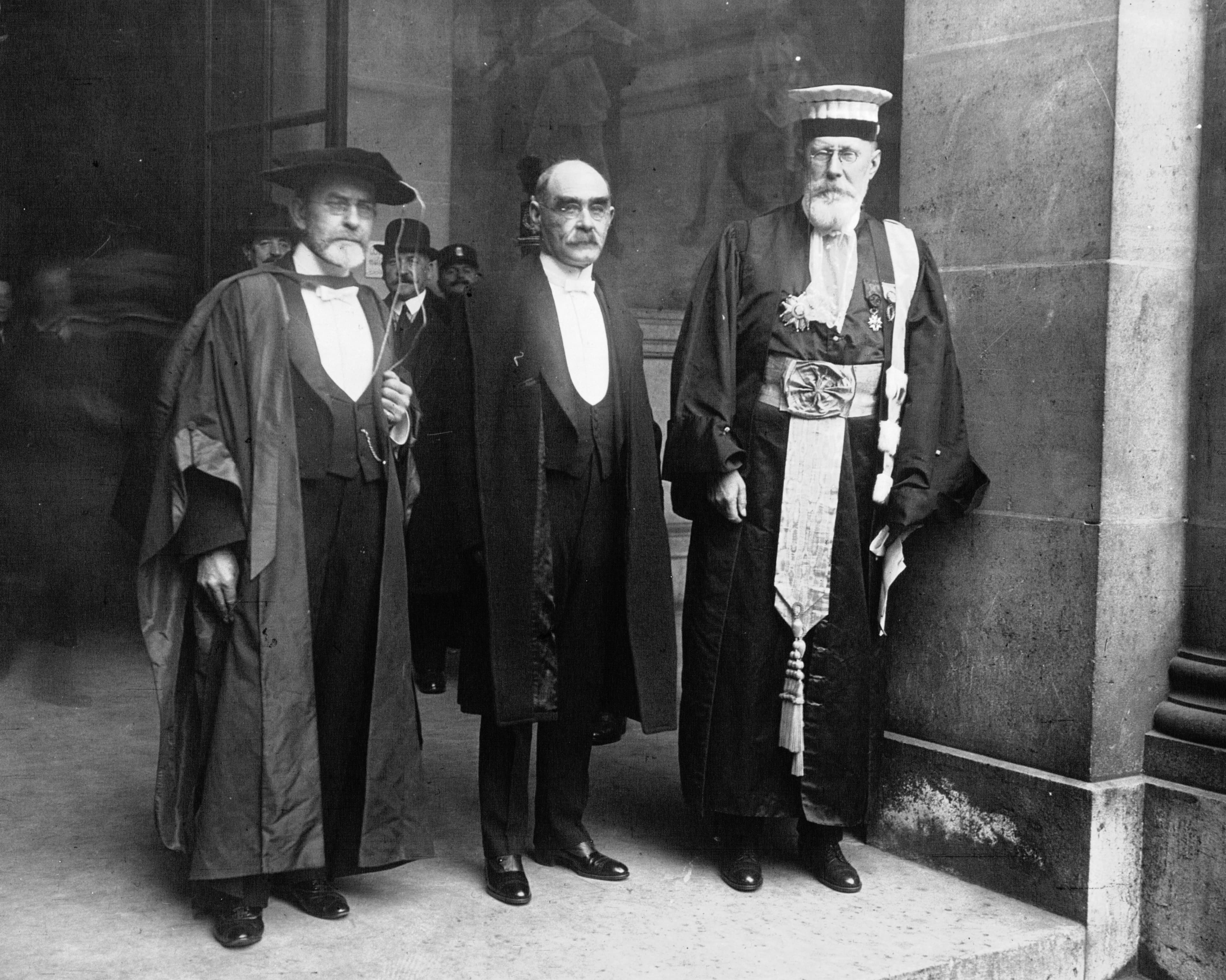
James George Frazer
1854–1941
Scottish anthropologist and classical scholar
James George Frazer studied classics in Glasgow and Cambridge and spent most of his working life at Trinity College. Friendship with William Robertson Smith drew him toward comparative anthropology and religion. His classical scholarship continued alongside this work, producing extensive translations and commentaries on Pausanias, Apollodorus, and Ovid, often shaped by questions about ritual and belief.1. Robert Ackerman, “Frazer, James George,” Rutgers University, Database of Classical Scholars, undated; accessed October 21, 2026, Biography, Publications, Papers.
The Golden Bough brought stories and customs from widely separated societies into a single comparative argument. Frazer’s proposed movement from magic through religion to science shaped later debate and literary imagination. Its evolutionary hierarchy and dependence on reports gathered by others also expose the limitations of his method, especially when compared with anthropology grounded in sustained fieldwork.2. Robert Ackerman, “Frazer, James George,” Rutgers University, Database of Classical Scholars, undated; accessed October 21, 2026, Biography, Publications, Papers.
How to read James George Frazer
The shorter Psyche’s Task supplies an entrance into Frazer’s comparative reasoning; The Golden Bough expands it greatly. Keep the full third edition distinct from the familiar abridgement. His own commentary on classical texts offers a different route through the same questions about custom, narrative, and belief.3. Robert Ackerman, “Frazer, James George,” Rutgers University, Database of Classical Scholars, undated; accessed October 21, 2026, Biography, Publications, Papers.
Myth, magic, kinship, and institutions
The Golden Bough is one work across its expanded editions: the twelve-volume third edition and later Aftermath must remain distinguishable. Totemism, Totemism and Exogamy, and Totemica are separate stages of a continuing inquiry into kinship and belief.4. National Diet Library catalogers, “The Collected Works of J. G. Frazer,” National Diet Library; Hon-no-Tomosha reprint, 1994, Contents of all 28 volumes; the collection is not the whole classical and editorial corpus.
Death, nature, and religious narratives
These investigations extend the comparison to afterlife beliefs, natural phenomena, and biblical stories. They preserve a historical body of argument; the descriptions of other societies must be read with attention to the circumstances under which Frazer’s sources were produced.5. National Diet Library catalogers, “The Collected Works of J. G. Frazer,” National Diet Library; Hon-no-Tomosha reprint, 1994, Contents of all 28 volumes; the collection is not the whole classical and editorial corpus.
Classical interpretation and literary essays
Frazer’s translations and commentaries are substantial works of scholarship, but the ancient texts keep their own authors. These records cover his introductions, translations, and commentary as contributions. Pausanias and Other Greek Sketches was reissued under the title Studies in Greek Scenery, Legend and History.6. Robert Ackerman, “Frazer, James George,” Rutgers University, Database of Classical Scholars, undated; accessed October 21, 2026, Biography, Publications, Papers. National Institute of Informatics catalogers, “Studies in Greek Scenery, Legend and History,” CiNii Books, National Institute of Informatics, Japan, 1919 edition; accessed October 21, 2026, Note: first published in 1900 as Pausanias and Other Greek Sketches.
- Sallust: Catiline and Jugurtha — Editorial Contribution
- Pausanias’s Description of Greece: Translation and Commentary
- Pausanias and Other Greek Sketches
- Apollodorus: The Library — Translation and Notes
- Ovid’s Fasti: Text, Translation and Commentary
- The Growth of Plato’s Ideal Theory
- The Gorgon’s Head and Other Literary Pieces
- Garnered Sheaves: Essays, Addresses and Reviews
Selections, shorter writings, and archives
The literary Bible anthology and Cowper edition retain Frazer’s role as selector, editor, and memoirist. His independently issued questionnaire, inaugural lecture, and Renan appreciation are listed alongside his own literary collection. Further articles, reviews, prefaces, and letters remain covered by explicit collections.7. John Mark Ockerbloom, editor, “James George Frazer,” University of Pennsylvania, The Online Books Page, undated; accessed October 21, 2026, Author catalog, independently titled publications and editorial contributions. Bibliothèque nationale de France catalogers, “Sur Ernest Renan,” BnF Catalogue général, 1923 edition; accessed October 21, 2026, FRBNF34178838; Paris, C. Aveline, 75 pages. National Library of Ireland catalogers, “Sir Roger de Coverley, and Other Literary Pieces,” National Library of Ireland, 1920 edition; catalog accessed October 21, 2026, Bibliographic description; Macmillan 1920.
- Passages of the Bible Chosen for Their Literary Beauty and Interest
- Sir Roger de Coverley and Other Literary Pieces
- Condorcet on the Progress of the Human Mind
- Questions on the Customs, Beliefs, and Languages of Savages
- The Scope of Social Anthropology
- Letters of William Cowper: Memoir and Editorial Contribution
- Sur Ernest Renan
- Collected Shorter Writings and Contributions
- Papers and Correspondence
Independent books and editorial collections are listed alongside coherent shorter-writing and archival units. The revised title The Devil’s Advocate belongs to Psyche’s Task; the many editions and extracts of The Golden Bough do not create additional original works. Modern selections, translations, and editorial apparatus still require separate rights review.8. National Diet Library catalogers, “The Collected Works of J. G. Frazer,” National Diet Library; Hon-no-Tomosha reprint, 1994, Contents of all 28 volumes; the collection is not the whole classical and editorial corpus. Robert Ackerman, “Frazer, James George,” Rutgers University, Database of Classical Scholars, undated; accessed October 21, 2026, Biography, Publications, Papers.
Reading guide sources
- Robert Ackerman, “Frazer, James George,” Rutgers University, Database of Classical Scholars, undated; accessed October 21, 2026, Biography, Publications, Papers.
- National Diet Library catalogers, “The Collected Works of J. G. Frazer,” National Diet Library; Hon-no-Tomosha reprint, 1994, Contents of all 28 volumes; the collection is not the whole classical and editorial corpus.
- National Diet Library catalogers, “The Collected Works of J. G. Frazer,” National Diet Library; Hon-no-Tomosha reprint, 1994, Contents of all 28 volumes; the collection is not the whole classical and editorial corpus.
- Robert Ackerman, “Frazer, James George,” Rutgers University, Database of Classical Scholars, undated; accessed October 21, 2026, Biography, Publications, Papers. National Institute of Informatics catalogers, “Studies in Greek Scenery, Legend and History,” CiNii Books, National Institute of Informatics, Japan, 1919 edition; accessed October 21, 2026, Note: first published in 1900 as Pausanias and Other Greek Sketches.
- John Mark Ockerbloom, editor, “James George Frazer,” University of Pennsylvania, The Online Books Page, undated; accessed October 21, 2026, Author catalog, independently titled publications and editorial contributions. Bibliothèque nationale de France catalogers, “Sur Ernest Renan,” BnF Catalogue général, 1923 edition; accessed October 21, 2026, FRBNF34178838; Paris, C. Aveline, 75 pages. National Library of Ireland catalogers, “Sir Roger de Coverley, and Other Literary Pieces,” National Library of Ireland, 1920 edition; catalog accessed October 21, 2026, Bibliographic description; Macmillan 1920.
- National Diet Library catalogers, “The Collected Works of J. G. Frazer,” National Diet Library; Hon-no-Tomosha reprint, 1994, Contents of all 28 volumes; the collection is not the whole classical and editorial corpus. Robert Ackerman, “Frazer, James George,” Rutgers University, Database of Classical Scholars, undated; accessed October 21, 2026, Biography, Publications, Papers.
Works in the library
33 under developmentTotemism
An early study of beliefs and practices linking human groups with natural beings.
Under developmentThe Golden Bough
A comparative study of magic and religion; the third edition comprises twelve volumes.
Under developmentAftermath: A Supplement to The Golden Bough
Further comparative material published as a supplement in 1936.
Under developmentLectures on the Early History of the Kingship
Lectures linking sacred kingship with comparative evidence about ritual authority.
Under developmentPsyche’s Task (The Devil’s Advocate)
A study of superstition’s proposed role in the development of social institutions.
Under developmentTotemism and Exogamy
Four volumes examining totemic institutions and marriage restrictions.
Under developmentTotemica: A Supplement to Totemism and Exogamy
A later supplement to Frazer’s work on totemism.
Under developmentThe Magical Origin of Kings
A separate essay on magic and royal authority.
Under developmentThe Belief in Immortality and the Worship of the Dead
Three volumes examining beliefs and practices concerning the dead.
Under developmentFolk-lore in the Old Testament
Comparative studies of biblical stories, practices, and law.
Under developmentThe Worship of Nature
An investigation of religious responses to natural powers and phenomena.
Under developmentMan, God and Immortality
Reflections on human progress and religious conceptions.
Under developmentMyths of the Origin of Fire
A comparative collection and study of narratives concerning the acquisition of fire.
Under developmentThe Fear of the Dead in Primitive Religion
Three volumes examining fear and ritual responses concerning the dead.
Under developmentCreation and Evolution in Primitive Cosmogonies and Other Pieces
Essays on accounts of origins and related comparative subjects.
Under developmentAnthologia Anthropologica
Four geographical volumes collecting reports on customs, beliefs, and social life.
Under developmentSallust: Catiline and Jugurtha — Editorial Contribution
Frazer’s revision of a school edition of Sallust, not original authorship of the histories.
Under developmentPausanias’s Description of Greece: Translation and Commentary
Six-volume translation and commentary combining topography, archaeology, history, and folklore.
Under developmentPausanias and Other Greek Sketches
A selection from the Pausanias commentary, reissued as Studies in Greek Scenery, Legend and History.
Under developmentApollodorus: The Library — Translation and Notes
Frazer’s two-volume translation and notes on the mythographic Library.
Under developmentOvid’s Fasti: Text, Translation and Commentary
Frazer’s five-volume treatment of Ovid’s calendar poem; later issued with abridged notes.
Under developmentThe Growth of Plato’s Ideal Theory
An essay tracing the development of Plato’s theory of ideas.
Under developmentThe Gorgon’s Head and Other Literary Pieces
A collection of literary and scholarly pieces.
Under developmentGarnered Sheaves: Essays, Addresses and Reviews
Collected essays, public addresses, and reviews.
Under developmentPassages of the Bible Chosen for Their Literary Beauty and Interest
A literary anthology selected by Frazer, with the biblical authorship preserved.
Under developmentSir Roger de Coverley and Other Literary Pieces
Frazer’s own literary sketches, biographical essays, and miscellaneous pieces.
Under developmentCondorcet on the Progress of the Human Mind
A separately issued lecture on Condorcet’s account of human progress.
Under developmentCollected Shorter Writings and Contributions
Further articles, lectures, reviews, prefaces, questionnaires, and editorial contributions.
Under developmentPapers and Correspondence
Letters and manuscript records across the documented Frazer archives.
Under developmentQuestions on the Customs, Beliefs, and Languages of Savages
A questionnaire intended to guide collectors of information about customs and languages.
Under developmentThe Scope of Social Anthropology
Frazer’s inaugural Liverpool lecture, separately published in 1908.
Under developmentLetters of William Cowper: Memoir and Editorial Contribution
Frazer’s biographical memoir, selection, and notes; the letters remain Cowper’s.
Under developmentSur Ernest Renan
A separately issued biographical appreciation of Ernest Renan.
Under development
Sources & portrait
- Robert Ackerman, “Frazer, James George,” Rutgers University, Database of Classical Scholars, undated; accessed October 21, 2026, Biography, Publications, Papers.
- Robert Ackerman, “Frazer, James George,” Rutgers University, Database of Classical Scholars, undated; accessed October 21, 2026, Biography, Publications, Papers.
Portrait: Agence Meurisse, reception of Frazer, Rudyard Kipling and Paul Appell at the Sorbonne, 1921. Bibliothèque nationale de France, Meurisse 93840. Frazer is the leftmost figure, selected through a monochrome circular display crop; the source photograph is unchanged. Image source. Collection record. Public domain; published 1921 press photograph, identified as public domain by the Bibliothèque nationale de France source record and published before 1931.. Displayed in monochrome with a circular crop.

